

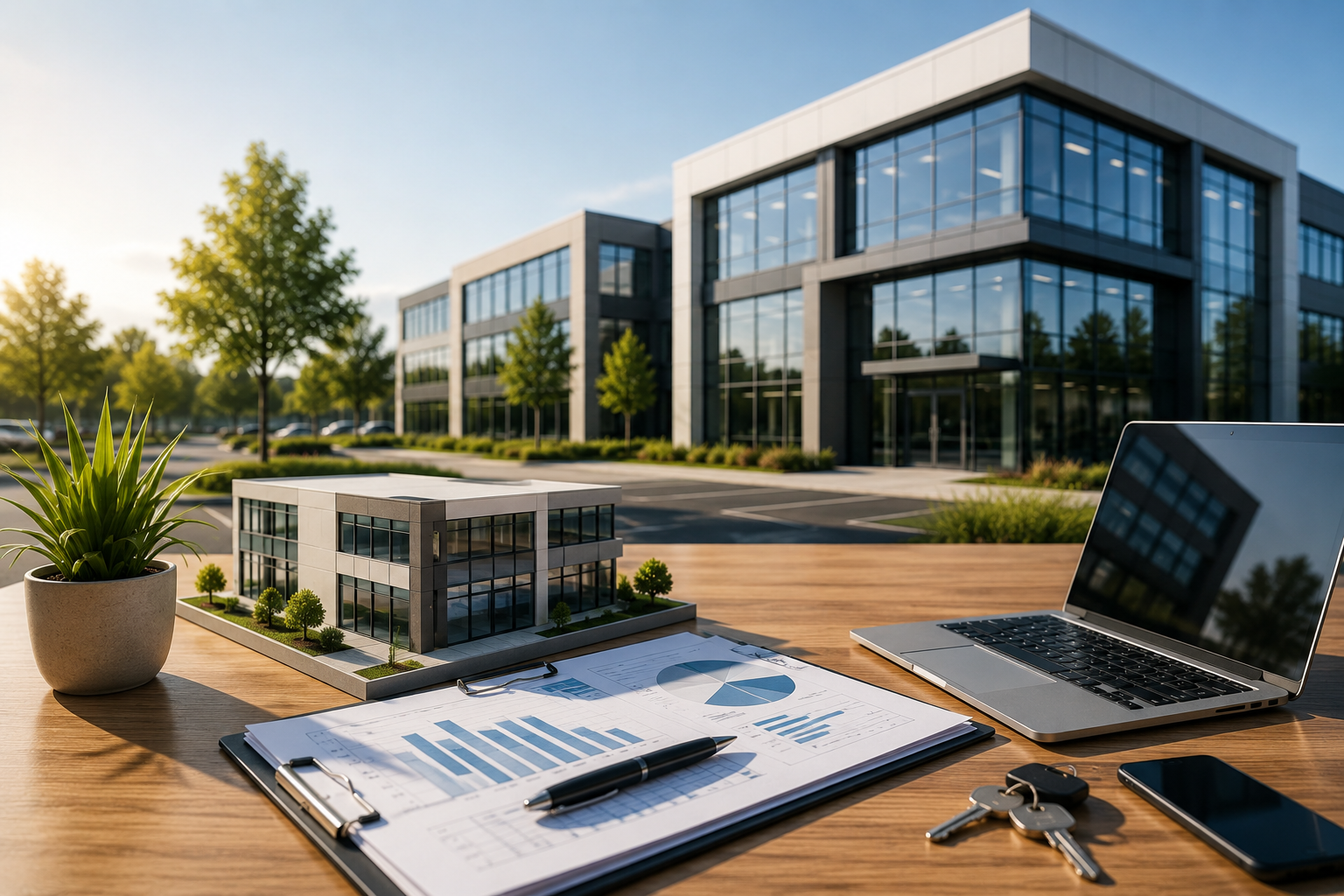
Choosing the right commercial property is one of the most important real estate decisions a business can make. Whether you are setting up a new office, opening a retail outlet, establishing a showroom, expanding operations, or purchasing a commercial property as part of a long-term business plan, the property you choose can influence your daily operations, customer accessibility, employee convenience, costs, and future growth.
The right commercial property is not necessarily the largest, newest, or most expensive option available. It is the property that fits your business requirements, location strategy, operational needs, budget, and long-term objectives. A structured evaluation before making a decision can help businesses avoid unnecessary costs and choose a space that works effectively for the years ahead.
If you are looking for commercial property in Jaipur, the following factors can help you evaluate your options more effectively.
1. Understand Your Business Requirements First
Before beginning your property search, clearly define what your business needs from the space. Starting the search without a clear requirement can result in spending time on properties that are unsuitable for your operations.
Consider:
- Type of business
- Required property type
- Required area
- Number of employees
- Customer or visitor requirements
- Storage requirements
- Parking needs
- Accessibility requirements
- Infrastructure needs
- Preferred location
- Purchase or leasing budget
- Future expansion plans
For example, an office may prioritize employee accessibility and professional surroundings, while a showroom may require high visibility, frontage, parking, and customer convenience.
2. Select the Right Type of Commercial Property
Commercial real estate includes several property formats, and each serves a different purpose.
Depending on your business, you may consider:
Office Spaces
Suitable for corporate offices, professional services, consulting firms, technology companies, and other office-based businesses. Factors such as connectivity, employee convenience, layout, parking, and building facilities can be important.
Retail Spaces
Retail properties generally require convenient customer access, visibility, appropriate frontage, surrounding commercial activity, and sufficient space for displaying and selling products.
Showrooms
Showrooms often require prominent locations, strong visibility, attractive frontage, customer parking, display areas, and convenient access.
Commercial Buildings
Entire commercial buildings can be suitable for businesses requiring larger premises, multiple floors, dedicated facilities, or opportunities for multi-use occupancy.
Business & Corporate Properties
These may be suitable for companies looking for professionally planned spaces with appropriate infrastructure, accessibility, and facilities for employees and visitors.
Mixed-Use Commercial Properties
Mixed-use properties can combine commercial and other permitted uses within a development and may offer flexibility depending on the business model and applicable regulations.
The property type should be selected based on how your business operates, rather than simply choosing what appears most attractive.
3. Location Should Match Your Target Market
Location is one of the most important considerations in commercial property selection.
A property should be accessible to the people who matter most to your business. For a retail business, this could mean proximity to its target customers. For an office, it may mean convenient access for employees and clients. For a showroom, visibility and road exposure may be particularly important.
Evaluate:
- Nearby residential areas
- Commercial activity
- Customer profile
- Road connectivity
- Public transportation
- Traffic movement
- Nearby businesses
- Parking
- Accessibility
- Overall business environment
A highly prominent location is not automatically the best location. The ideal location depends on your business model and target audience.
4. Evaluate Accessibility and Connectivity
A commercial property should be reasonably convenient to reach.
Consider the property’s connection to major roads, highways, business districts, public transportation, and important surrounding areas. Also examine the actual approach road rather than relying solely on the property’s distance from a major route.
For businesses that receive frequent visitors, suppliers, or deliveries, easy access can significantly improve everyday operations.
5. Consider Visibility and Frontage
Visibility can be particularly valuable for customer-facing businesses.
Retail stores, showrooms, restaurants, clinics, and similar businesses may benefit from strong road visibility and suitable frontage.
When evaluating a property, consider:
- Road-facing position
- Frontage width
- Visibility from passing traffic
- Building orientation
- Entry and exit points
- Signage possibilities
- Obstructions from surrounding structures
For businesses that depend on physical customer traffic, these details can make a meaningful difference.
6. Choose the Right Size
The property should provide enough space for current operations without creating unnecessary occupancy costs.
Think beyond the basic floor area. Consider how the space will actually be used for workstations, customer areas, storage, display areas, meeting rooms, circulation, equipment, parking, or other business functions.
A property that is too small may restrict operations, while an unnecessarily large property can increase purchase, maintenance, furnishing, and operating expenses.
The ideal size is one that provides functional space with reasonable room for future growth.
7. Examine the Layout and Usable Space
The total area of a commercial property does not always represent its practical usability.
Evaluate the floor plan, room configuration, columns, entrances, common areas, circulation space, natural light, ventilation, and placement of essential facilities.
Ask yourself:
Can this property be arranged efficiently for the way my business operates?
A well-planned layout can improve employee productivity, customer experience, storage efficiency, and overall use of the premises.
8. Evaluate Parking and Customer Convenience
Parking can be an important factor for many commercial businesses.
If customers, employees, vendors, or business partners regularly visit the property, insufficient parking can become a daily inconvenience.
Consider:
- On-site parking
- Visitor parking
- Roadside accessibility where legally permitted
- Parking management
- Entry and exit convenience
- Capacity during peak business hours
The importance of parking will vary depending on the property type and location, but it should not be overlooked.
9. Check Infrastructure and Building Facilities
Before purchasing a commercial property, understand what infrastructure is already available.
Depending on your business, evaluate:
- Electricity capacity
- Water supply
- Drainage
- Internet connectivity
- Air-conditioning provisions
- Fire-safety systems
- Elevators
- Security
- Common areas
- Waste management
- Building maintenance
Specialized businesses may have additional requirements. These should be identified before committing to the property.
10. Consider the Surrounding Business Environment
A commercial property does not operate in isolation.
The businesses, developments, residential areas, institutions, and infrastructure surrounding the property can influence its suitability.
For some businesses, being near complementary businesses can create advantages. For others, direct competition may need to be considered carefully.
Look at the broader commercial ecosystem and ask whether the surrounding environment supports your business objectives.
11. Evaluate the Total Cost of Ownership
Purchase price is an important consideration, but it should not be the only financial factor.
A commercial property can involve additional expenses such as:
- Registration and transaction-related costs
- Maintenance
- Property taxes or applicable charges
- Utilities
- Renovation
- Interiors and fit-outs
- Parking or common-area charges
- Repairs
- Insurance
- Ongoing property management
Understanding the total cost of ownership helps businesses make a more realistic comparison between different properties.
12. Compare the Property With Other Options
Avoid making a decision based on a single property without comparing alternatives.
Create a simple comparison based on location, size, price, accessibility, infrastructure, condition, parking, surroundings, and future suitability.
For example:
| Factor | Property A | Property B | Property C |
|---|---|---|---|
| Location | Evaluate | Evaluate | Evaluate |
| Area | Compare | Compare | Compare |
| Accessibility | Compare | Compare | Compare |
| Visibility | Compare | Compare | Compare |
| Parking | Compare | Compare | Compare |
| Infrastructure | Compare | Compare | Compare |
| Price | Compare | Compare | Compare |
| Condition | Compare | Compare | Compare |
| Future Suitability | Evaluate | Evaluate | Evaluate |
This approach helps you evaluate the overall value of a property, rather than focusing only on its asking price.
13. Think About Your Future Growth
A commercial property should ideally support your business beyond its immediate requirements.
If you expect your team, customer base, inventory, or operations to grow, consider whether the property can accommodate those changes.
Future requirements may include:
- Additional workspace
- More storage
- More parking
- Additional equipment
- Larger customer areas
- Expansion within the property
- Access to nearby commercial space
Planning for growth at the time of purchase can reduce the possibility of having to relocate prematurely.
14. Conduct a Physical Property Inspection
Photographs and property descriptions can provide an initial understanding, but they cannot replace a physical site visit.
During the visit, inspect:
- Building condition
- Flooring
- Walls and ceilings
- Doors and windows
- Electrical infrastructure
- Plumbing
- Common areas
- Parking
- Access roads
- Surrounding properties
- Natural light and ventilation
A site visit can reveal practical issues that may not be visible through online listings or photographs.
15. Verify Legal and Property Documentation
Before purchasing commercial real estate, appropriate due diligence is essential.
Depending on the property, buyers may need to review ownership, title, property records, approved plans, land use, building permissions, encumbrances, applicable taxes or dues, and other relevant documentation.
The specific requirements can vary from property to property. Buyers should obtain appropriate legal and professional advice and independently verify the relevant documents before completing a transaction.
16. Consider the Property’s Permitted Use
A property should be suitable for the business activity you intend to conduct there.
Do not assume that every commercial property can automatically be used for every type of business.
Check applicable zoning, land-use provisions, building regulations, permissions, society or development restrictions, and other relevant requirements. Any proposed alterations or change in use should also be evaluated appropriately.
17. Assess the Property’s Long-Term Commercial Potential
If you are purchasing commercial real estate, think beyond the immediate business requirement.
Factors such as location, connectivity, surrounding development, infrastructure, accessibility, and commercial activity may influence the property’s long-term relevance.
However, future appreciation or investment returns should never be assumed simply because a property is located in a developing area. Such considerations should be evaluated using reliable market information and appropriate professional advice.
18. Negotiate Based on the Complete Property Value
Once you have identified a suitable property, negotiation should consider more than the asking price.
Factors such as property condition, location, infrastructure, included facilities, possession timeline, required modifications, documentation, and comparable properties can all be relevant to the discussion.
Having a clear understanding of the property’s strengths and limitations can help buyers approach negotiations more effectively.
A Practical Checklist Before Buying Commercial Property
Before finalizing your decision, ask:
- Does the location suit my target customers and employees?
- Is the property easily accessible?
- Is the size appropriate for my current requirements?
- Can the layout support my operations?
- Is there sufficient parking?
- Is the required infrastructure available?
- Does the surrounding environment support my business?
- Is the total cost within my budget?
- Does the property have appropriate permitted use?
- Have I physically inspected the property?
- Have the relevant documents been independently verified?
- Does the property support my future business plans?
- Have I compared it with other suitable options?
If the answer to these questions is satisfactory, you are in a much stronger position to evaluate the property as a potential purchase.
Making a Smarter Commercial Property Decision
Choosing the right commercial property requires a balance between business requirements, location, functionality, financial considerations, and long-term planning. The most attractive property on paper may not necessarily be the most suitable one for your business.
A well-informed decision comes from understanding what your business needs, identifying relevant properties, comparing alternatives, visiting shortlisted options, evaluating their practical suitability, and conducting appropriate due diligence before moving forward.
At Anita Associates, we assist businesses and buyers looking for commercial properties in Jaipur by understanding their requirements, identifying relevant opportunities, shortlisting properties, coordinating site visits, facilitating buyer–seller communication, supporting negotiations, and coordinating transaction-related processes.
Whether you are purchasing an office, retail space, showroom, commercial building, or another type of commercial property, the objective should remain the same: choose a property that works for your business today while giving it room to move forward tomorrow.